What makes it unique
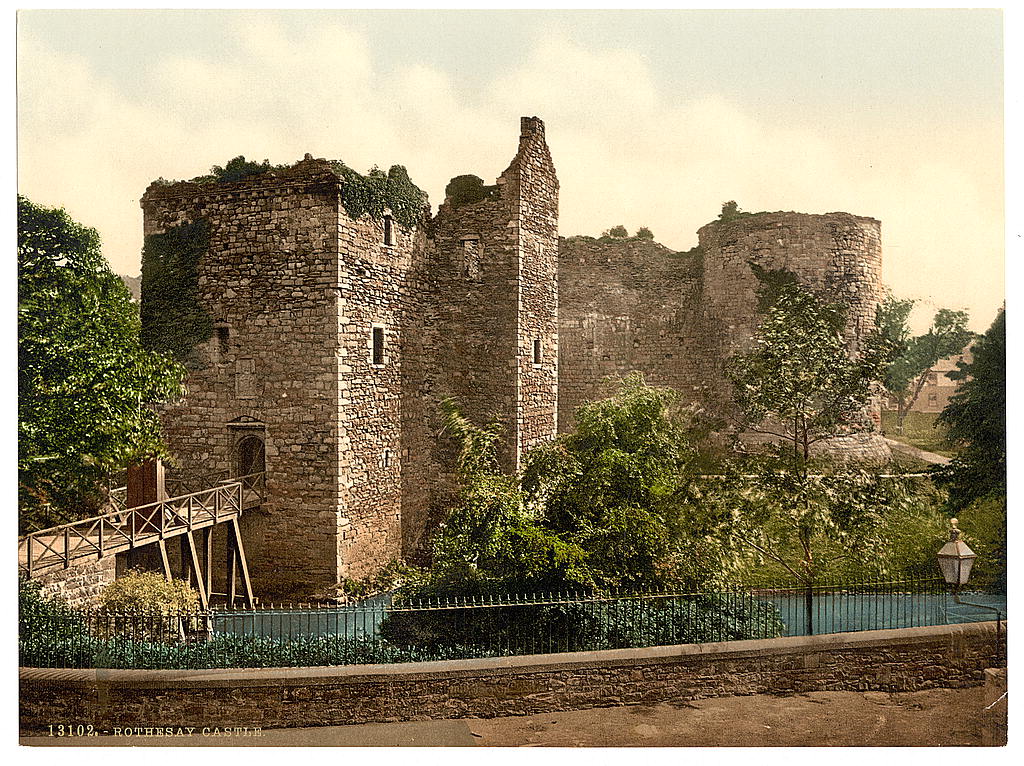
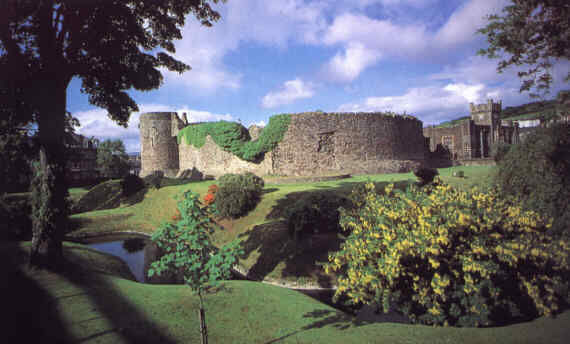
The core of the castle is a circular curtain wall of local red sandstone, raised in the early 12th century when the Clyde was contested water between the Scots and the Norse kingdom of the Isles. Four projecting drum towers were added later, and the whole thing sits on a low mound inside a broad, deliberately flooded ditch.
Circular plans were briefly fashionable in northern Europe, but Rothesay is Scotland's only surviving example — which is why architectural historians talk about it far more than its modest size suggests. The moat is not decoration either: it is the reason the shell survived when the timber and roofs did not.
The great forework, the tall gatehouse block you enter through, was added by the early Stewart kings and later remodelled as royal lodgings, complete with a first-floor hall and a small chapel dedicated to St Michael.
- Built
- Early 12th century
- Plan
- Circular curtain, four drum towers
- Moat
- Still water-filled
- Care of
- Historic Environment Scotland