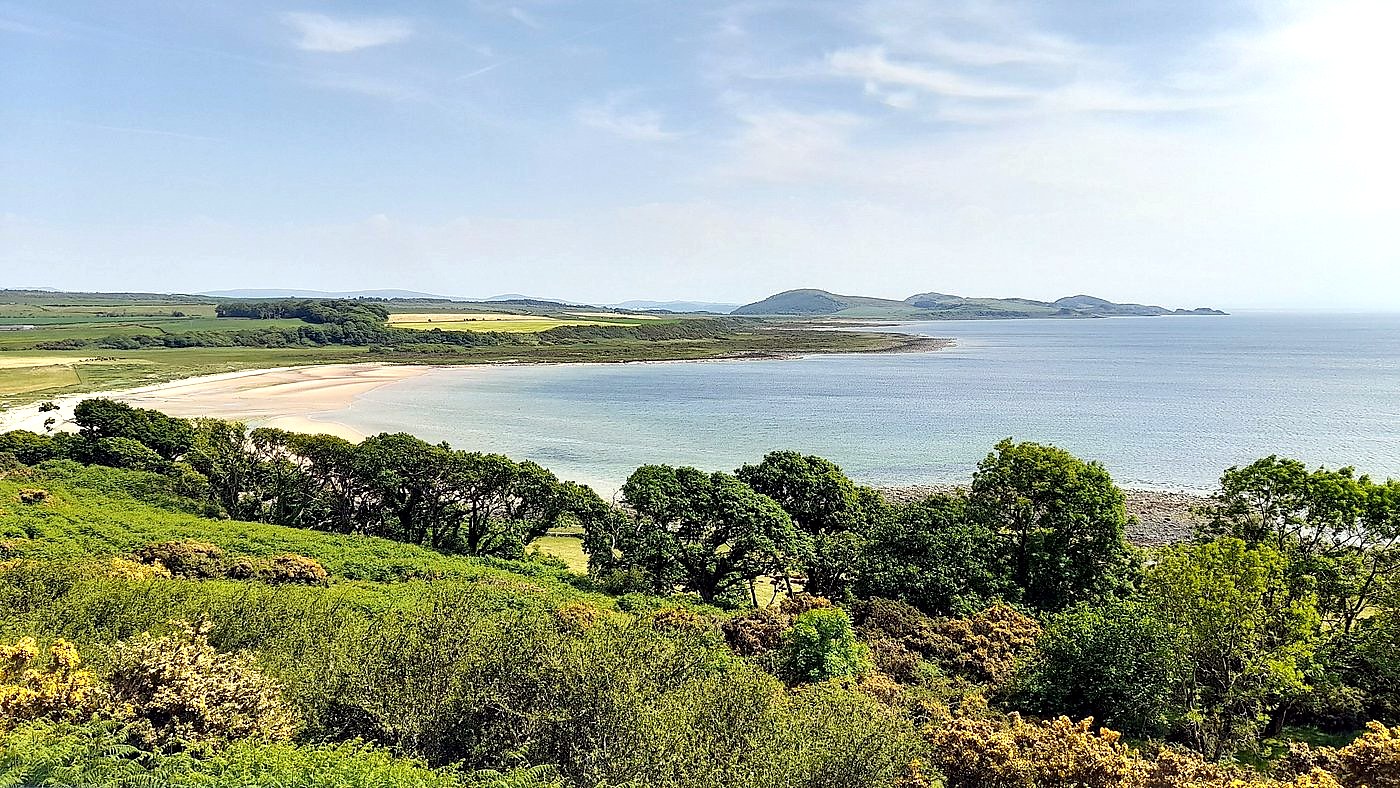
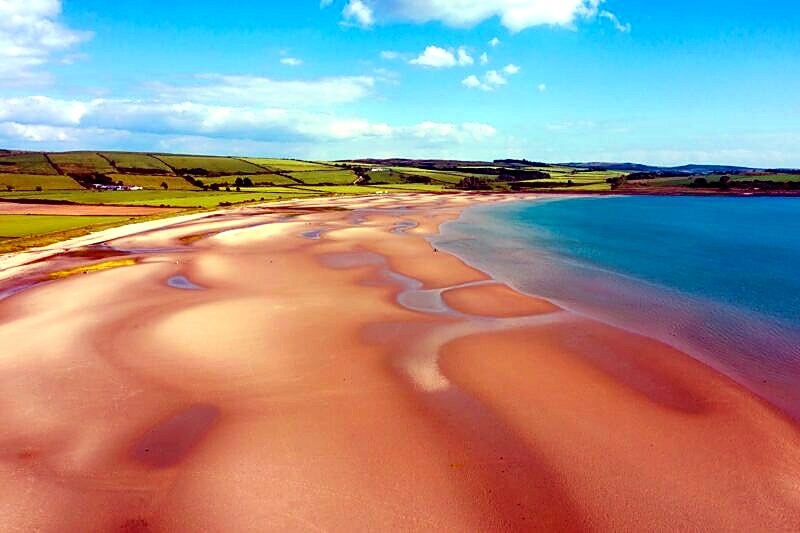
Wide sandy bay on the west coast of the Isle of Bute at low tide
Things to do / Beaches

The beaches of Bute — sand, seals and sunsets over Arran.

For an island fifteen miles long, Bute is absurdly well supplied with beaches. The west coast catches the sunsets and the sand; the south is rockier, wilder and quieter; the east looks across the narrow Firth to the Cowal hills. None of them are busy, even in August, and all of them are free. Here is what each one is actually like — where to park, where to swim, and where to take a flask and watch the light go.

01

Ettrick Bay — the island's beach

If you have one afternoon and children in tow, come here. Ettrick Bay is a broad, west-facing crescent on the road out past Kilmory: roughly a mile of firm, flat sand that shelves so gently you can walk out a long way at low water. There is a car park at each end of the bay, and the Ettrick Bay Tea Room at the southern end has been feeding sandy families for generations.

It is also the best sunset on Bute. On a clear evening the sun drops behind the Kintyre peninsula with the peaks of Arran ranged to the south, and the wet sand turns the whole thing into a mirror. Bring a windbreak — the bay is open to the Sound of Bute and there is usually a breeze.

The old tramway that once carried Victorian day-trippers here from Rothesay is gone, but the flat lane behind the beach follows part of its line and makes an easy walk or cycle.

Sand
Firm, gently shelving
Parking
Two free car parks
Facilities
Tea room, toilets
Best for
Families, sunsets, paddling
Seals hauled out on rocks below Scalpsie Bay, Isle of Bute
02

Scalpsie Bay — seals and the seven-county view

Scalpsie is the one people remember. A signposted viewpoint on the A844 looks down over a curve of sand and skerries where a colony of common and grey seals hauls out — often dozens of them, particularly on a falling tide in the middle of the day. A short path drops from the roadside down to the shore through bracken and gorse.

The beach itself is a mix of sand and shingle with rocky ribs running out into the water; it is a place for rock pools, driftwood and long looks at Arran rather than swimming laps. Walk up the hill behind it to the Scalpsie viewpoint and, on a clear day, you are looking at parts of seven old counties.

Please watch the seals from the path or the upper beach. If heads all lift and animals start shuffling towards the water, you are too close — back off and they will settle.

Sand
Sand and shingle, rocky ribs
Parking
Roadside viewpoint on A844
Best for
Seals, rock pools, views
Access
Short steep path to shore
03

Kilchattan Bay — the quiet south

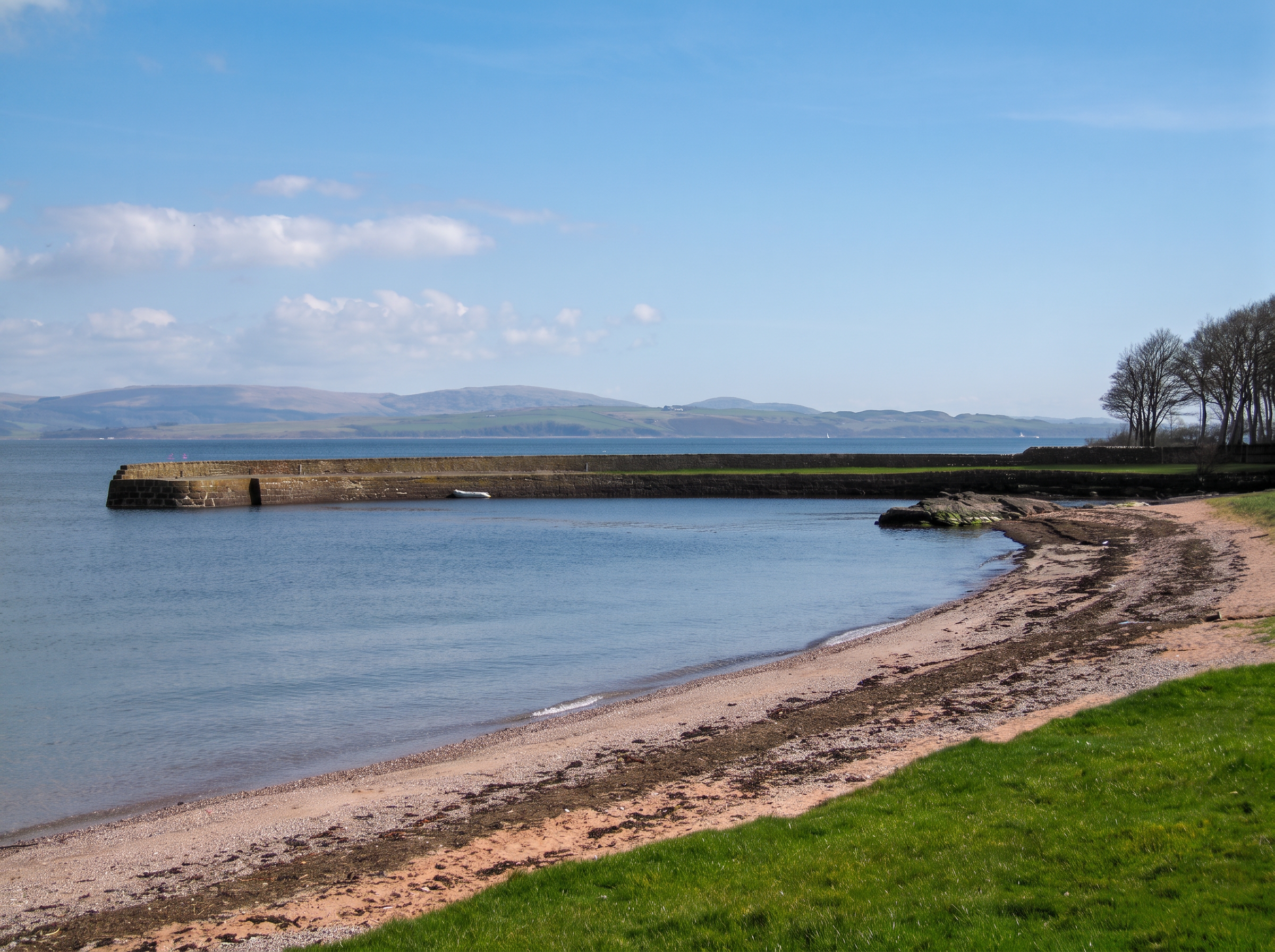
At the island's southern end, Kilchattan Bay is a tidy arc of pale sand backed by a single row of Victorian villas and the start (or end) of the West Island Way. It faces east across the Firth, so it gets the morning sun and is sheltered when the west coast is being scoured.

It is the most swimmable beach on the island after Ettrick: sand underfoot, a gentle shelf, and the bay itself is calm enough that dinghies and kayaks launch from the slip. There is a bus turning circle at the end of the road and limited roadside parking, so arrive early on a hot Sunday.

Combine it with the walk south to St Blane's Chapel — a 12th-century ruin in a hollow above the sea that is one of the loveliest spots in the Clyde.

Sand
Pale sand, sheltered
Parking
Limited roadside
Best for
Swimming, kayaks, walking
Nearby
St Blane's Chapel
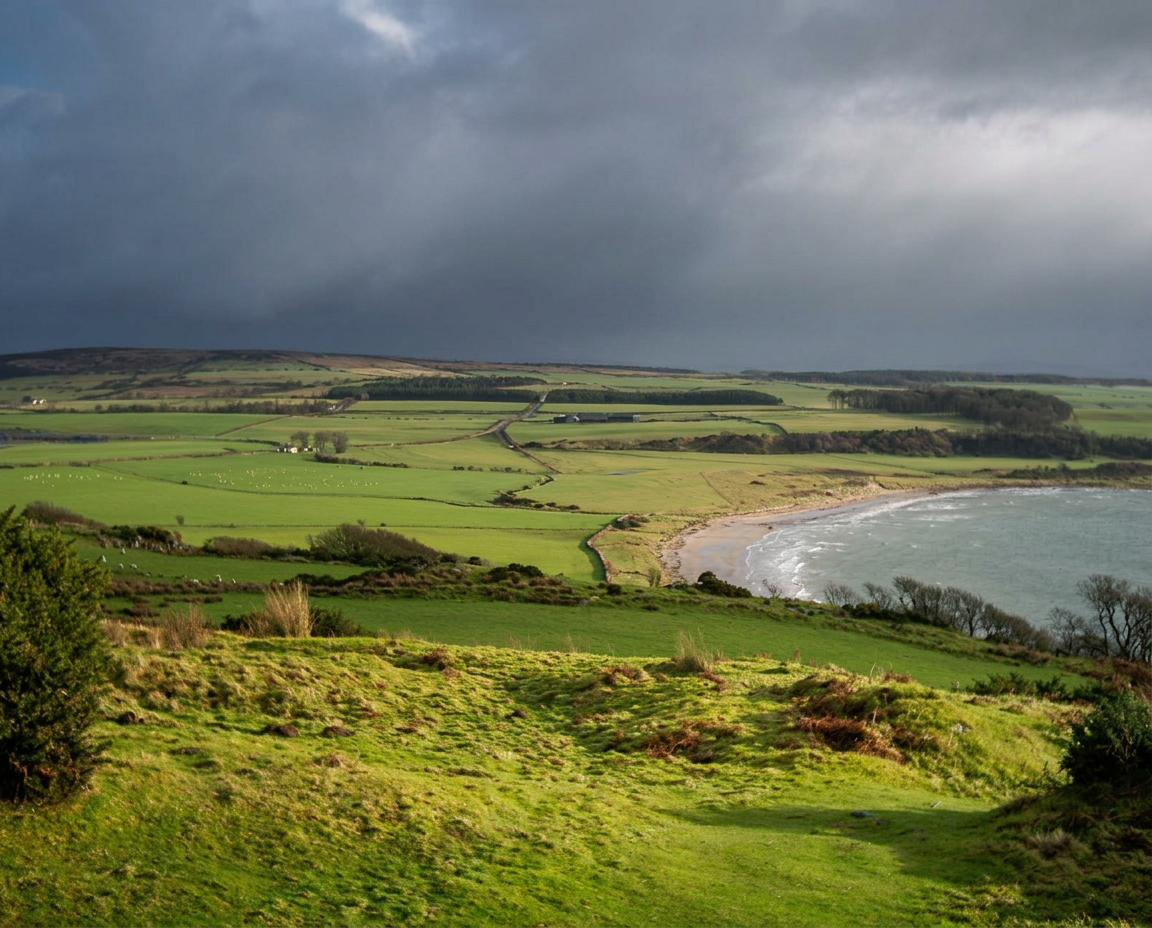
Coastal path above a remote bay on the Isle of Bute
04

Stravanan, Glencallum and the wild ones

Stravanan Bay, on the south-west shore below Kingarth, is the beach you go to when you want no one at all: a long, dune-backed stretch of sand reached by a farm track and a field path, with the Arran skyline filling the horizon. No facilities, no signs, frequently no other footprints.

Glencallum Bay, at the very southern tip, is smaller and stonier — a pebble cove ringed by rock with the old Rubh' an Eun lighthouse nearby. It takes a proper walk to reach it from Kilchattan Bay, which is exactly why it feels like a discovery.

On the east coast, Bogany and Craigmore have small shingle beaches within walking distance of Rothesay, handy for an evening stroll, and Port Bannatyne's shoreline is where locals go to skim stones and watch the yachts.

Stravanan
Dunes, sand, no facilities
Glencallum
Pebble cove, walk-in only
East coast
Shingle, close to Rothesay
05

Practical beach advice

There are no lifeguards on any Bute beach. Sea temperature runs from around 7C in early spring to a friendlier 14-15C by late August, so most people either wear a wetsuit or keep it brief and triumphant.

Check the tide before you commit to a long sandy walk at Ettrick or Stravanan — the water comes in a long way over flat ground. Scalpsie's rocky sections are slippery on a falling tide.

Dogs are welcome everywhere, all year, with no seasonal restrictions; keep them close around seals and livestock. Midges appear on still, damp evenings inland but rarely trouble the open west-coast beaches. Take your litter home: none of these bays have bins, and that is part of why they stay lovely.

Check today's Bute forecast and sea temperature